A well-stocked first aid kit is essential for any home, car, or outdoor adventure. Accidents can happen at any time, and being prepared can make all the difference in ensuring safety and quick recovery. Knowing what to include in a first aid kit not only empowers individuals but also provides peace of mind.
This article highlights 20 must-have items that should be in every first aid kit. From bandages to antiseptics, each item plays a crucial role in addressing minor injuries and emergencies. Understanding the purpose of these supplies can help anyone respond effectively when it matters most. Whether you’re a parent, a hiker, or someone who just wants to be ready for the unexpected, this guide will ensure you’re equipped for any situation.
Overview of First Aid Kits
First aid kits contain essential supplies for addressing injuries and emergencies. They serve as critical resources for parents, outdoor enthusiasts, and individuals preparing for unexpected situations. A well-stocked kit enhances safety and supports effective treatment.
Key Components of First Aid Kits
First aid kits typically consist of multiple key components, each serving a specific purpose:
- Adhesive bandages: Promote healing for small cuts and abrasions.
- Sterile gauze pads: Absorb blood and protect larger wounds.
- Antiseptic wipes: Clean wounds and reduce infection risk.
- Antibiotic ointment: Prevent infections in minor cuts.
- Medical tape: Secure dressings in place.
- Tweezers: Remove splinters or debris from wounds.
- Scissors: Cut tape, gauze, or clothing for access to injuries.
- Instant cold packs: Reduce swelling and alleviate pain.
- Elastic bandages: Support sprains and strains.
- Pain relievers: Alleviate discomfort from injuries.
- Thermometer: Measure body temperature to identify fevers.
- First aid manual: Provide guidance on handling emergencies.
- Gloves: Protect against contamination when treating injuries.
- CPR mask: Facilitate safe resuscitation efforts.
- Eye wash solution: Flush out contaminants from eyes.
- Burn cream: Soothe burns and promote healing.
- Hydrocortisone cream: Relieve minor rashes and itching.
- Safety pins: Secure items or clothing if necessary.
- Alcohol pads: Disinfect skin before injections or procedures.
- Emergency blanket: Maintain body temperature in shock cases.
- Tourniquet: Control severe bleeding in emergencies.
Importance of Regularly Checking First Aid Kits
Regularly inspecting first aid kits is crucial for ensuring supplies remain adequate and functional. Confirm all items are within their expiration dates and replace used or expired products promptly. Regular checks help maintain preparedness for emergencies and enhance safety.
Essential Items for Every First Aid Kit
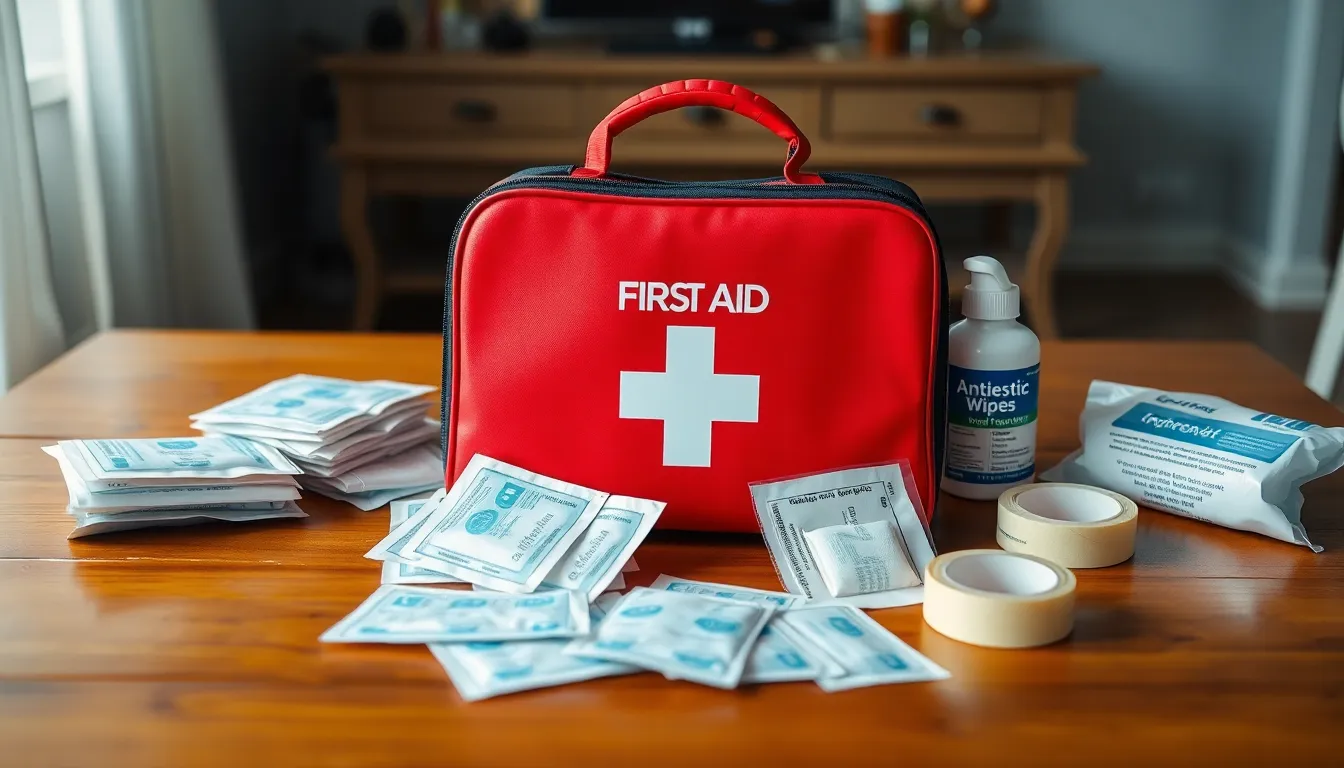
A well-stocked first aid kit enhances safety during emergencies. Below are essential items that every first aid kit should include.
Adhesive Bandages
Adhesive bandages protect minor cuts and abrasions from dirt and bacteria. They come in various sizes and shapes, providing versatility for different injuries. Use them immediately for small wounds to promote healing.
Sterile Gauze Pads
Sterile gauze pads absorb blood and exudate from wounds. They provide cushioning and protect the injured area from infection. Secure them with medical tape or a bandage to keep them in place.
Antiseptic Wipes
Antiseptic wipes cleanse wounds to remove contaminants. They reduce the risk of infection by disinfecting surfaces before applying dressings. Their convenient packaging allows for easy use on the go.
Medical Tape
Medical tape secures bandages and gauze in place. It is essential for maintaining dressing stability, especially for larger wounds. Choose a skin-friendly tape to minimize irritation.
Tweezers
Tweezers help remove splinters, ticks, and other foreign objects from the skin. They provide precision in handling small items without further injury. Keep them sanitized to ensure safety during use.
Scissors
Scissors cut gauze, tape, and clothing in emergencies. Use trauma shears for quick access to wounds. Opt for blunt-tipped scissors to prevent accidental cuts.
Disposable Gloves
Disposable gloves protect both the caregiver and the injured person from infections. They should be worn when treating wounds and checking for injuries. Latex-free options are available for individuals with latex allergies.
Instant Cold Packs
Instant cold packs reduce swelling and numb pain caused by sprains or strains. They provide immediate relief by applying cold to injured areas. Activate them easily by squeezing and shaking the pack.
Pain Relievers
Pain relievers like acetaminophen or ibuprofen alleviate discomfort from injuries. They offer temporary relief, making it easier to manage pain while seeking medical attention. Include both adult and children’s dosages in your kit.
First Aid Manual
A first aid manual provides essential information on treating various injuries and emergencies. It serves as a valuable reference, especially for those without prior training. Choose a manual that’s easy to understand and includes visuals.
Additional Recommended Items
Including additional items in a first aid kit can enhance preparedness for various medical situations. These recommended items address specific injuries and health concerns that may arise.
Burn Cream
Burn cream provides pain relief and promotes healing for minor burns. It typically contains ingredients like aloe vera and lidocaine. These components soothe the skin, reduce inflammation, and help prevent infection. Having burn cream on hand aids in managing injuries caused by hot surfaces, flames, or chemicals.
Antihistamines
Antihistamines are essential for alleviating allergic reactions. They relieve symptoms such as itching, hives, and sneezing caused by pollen, insect bites, or other allergens. Including both oral tablets and topical creams in the kit ensures effective treatment for various allergic reactions based on severity.
Thermometer
A thermometer measures body temperature accurately, helping assess fevers. Digital thermometers provide quick and precise readings, making them ideal for first aid kits. Monitoring temperature is crucial for determining the severity of an illness or infection, allowing for timely medical intervention.
Elastic Bandages
Elastic bandages provide support and compression for sprains, strains, and swollen areas. They help stabilize injuries and reduce swelling through gentle compression. Including several sizes of elastic bandages ensures adaptability for different body parts and various injury types.
CPR Face Shield
A CPR face shield is critical for safely administering CPR in emergencies. It protects both the rescuer and the victim during mouth-to-mouth resuscitation by creating a barrier. Carrying a CPR face shield equips individuals to respond effectively and safely in life-threatening situations.
Eye Wash Solution
Eye wash solution flushes out irritants, debris, and chemicals from the eyes. A sterile saline solution or commercially prepared eyewash can effectively cleanse and soothe irritated eyes. Including eye wash in a first aid kit ensures quick response to eye injuries and reduces the risk of serious damage.
A well-stocked first aid kit is an essential tool for anyone looking to enhance safety during everyday activities and emergencies. By including the right items and regularly checking their condition, individuals can ensure they’re prepared for unexpected situations.
Whether at home, in the car, or while enjoying outdoor adventures, having the necessary supplies can make a significant difference in managing injuries and providing prompt care. Empowering oneself with knowledge about these items and their uses fosters confidence and readiness, ultimately promoting a safer environment for everyone.