Table of Contents
ToggleLiving in an urban desert means dealing with pests that most suburban homeowners never encounter. Scorpions in shoes, bark beetles boring into landscape timber, and packrats nesting in attics aren’t just nuisances, they’re structural and safety threats. Desert pests are tougher, more persistent, and adapted to survive extreme heat and minimal moisture. This guide covers identification, prevention, and control strategies tailored specifically to arid urban environments. Whether you’re a new desert homeowner or a longtime resident tired of fighting the same battles every summer, these practical tactics will help you reclaim your space.
Understanding Common Desert Pests in Urban Areas
Desert cities attract a specific roster of pests that thrive in low humidity and extreme heat. Scorpions, especially bark scorpions in the Southwest, are the most dangerous. They’re nocturnal, hide in cracks as narrow as 1/16″, and their sting can require medical attention, particularly for children and pets.
Roof rats and packrats are year-round problems. Packrats build nests from cactus spines, wiring insulation, and anything else they scavenge. They chew through stucco, PVC irrigation lines, and even aluminum soffit vents. Roof rats prefer attics and palm trees, and both species carry hantavirus.
Desert cockroaches (including the American cockroach and desert cockroach species) don’t need much water. They’ll live in wall voids, subfloor spaces, and irrigation valve boxes. Ants, particularly Argentine ants and harvester ants, are relentless. Argentine ants form supercolonies spanning entire neighborhoods, while harvester ants deliver painful stings and clear vegetation from large areas.
Bark beetles and termites target stressed or dead wood. Subterranean termites build mud tubes up foundation walls, and drywood termites infest roof framing and furniture. Both cause serious structural damage if left unchecked. Many homeowners dealing with these pests use boric acid treatments for indoor infestations.
Bed bugs aren’t exclusive to deserts, but urban density and travel hubs make them common. They hide in mattress seams, baseboards, and electrical outlets.
Why Desert Environments Attract Unique Pests
Desert pests evolved to exploit scarce resources, which makes your home a jackpot. Water is the primary draw. A dripping hose bib, a clogged AC condensate line, or an over-irrigated flower bed creates an oasis. Scorpions, roaches, and ants will congregate anywhere moisture exists.
Shade and temperature regulation matter just as much. Exterior walls, covered patios, and crawl spaces offer refuge from 110°F+ summer heat. Pests don’t need much, just a few degrees cooler and protection from UV exposure.
Human food and waste supplement natural diets. Roof rats eat citrus, pet food, and garbage. Ants follow scent trails to crumbs, grease, and sugary spills. Even small gaps under garage doors or torn window screens provide access.
Urban landscaping introduces non-native plants that pests love. Palm trees, citrus, and dense shrubs against the house create harborage and food sources. Rock mulch and decorative boulders trap heat and moisture underneath, attracting scorpions and spiders.
Desert nights cool off fast, driving pests indoors. Temperature swings of 30-40°F between day and night push them to seek stable microclimates, often inside your walls or attic.
Year-Round Prevention Strategies for Desert Homes
Prevention starts with exclusion. Walk your home’s perimeter and seal any crack or gap larger than 1/16″. Use polyurethane or silicone caulk for stucco cracks, copper mesh for weep holes (maintains drainage while blocking entry), and weatherstripping for door sweeps. Replace damaged window screens with 20-mesh or finer screening, standard 18-mesh lets young scorpions through.
Inspect and seal around:
- Utility penetrations (gas, water, electrical conduit)
- AC line-set entry points
- Roof vents and exhaust fan housings
- Expansion joints in slab foundations
- Gaps where stucco meets door or window frames
Moisture control is non-negotiable. Fix leaks immediately. Slope soil away from foundations (minimum 6″ drop over 10 feet). Redirect AC condensate lines at least 10 feet from the house. Avoid over-watering landscaping, many desert plants need water only every 7-14 days once established.
Trim vegetation back at least 18″ from exterior walls. Remove dead palm fronds (roof rat nesting material) and clear leaf litter from gutters and around the foundation. Don’t stack firewood against the house: keep it elevated on a rack at least 20 feet away.
Store pet food in sealed plastic or metal bins. Don’t leave food bowls out overnight. Rinse recyclables before tossing them in bins, and keep trash cans sealed.
Install door sweeps on all exterior doors, including the one between your garage and house. Garage doors should have a tight bottom seal, replace worn rubber. For serious pest pressure, homeowners often rely on professional pest control services for quarterly treatments.
DIY Pest Control Solutions That Work in Arid Climates
Start with diatomaceous earth (DE), food-grade only. It’s a desiccant that damages insect exoskeletons. Apply a light dust in attics, crawl spaces, wall voids (via outlet boxes with power off), and around the foundation. Reapply after rain or irrigation. Wear an N95 mask when applying: DE is a respiratory irritant.
Boric acid works well for roaches and ants. Mix 1 part boric acid, 1 part powdered sugar, and 2 parts flour. Form pea-sized balls and place them in areas pets and kids can’t reach, under appliances, inside cabinets, behind baseboards. Boric acid disrupts digestion: insects carry it back to nests.
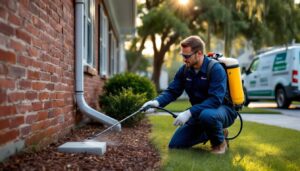
For scorpions, use a blacklight flashlight (UV) for nighttime hunts, they glow bright green. Catch-and-release or kill them with a long-handled grabber or boot. Spray a pyrethroid-based insecticide (like bifenthrin or cyfluthrin) as a perimeter barrier. Apply a 3-foot band up exterior walls and 6-10 feet out from the foundation. Reapply every 60-90 days and after heavy rains. Wear gloves, goggles, and long sleeves when mixing and spraying.
Ant baits (gel or granular) containing borax, fipronil, or hydramethylnon work better than sprays. Ants carry bait back to the colony. Place baits along trails and near entry points. Patience is key, it can take 7-14 days to collapse a colony.
For packrats and roof rats, use snap traps baited with peanut butter, dried fruit, or nesting material (cotton balls work surprisingly well). Place traps along walls in attics, garages, and near entry points. Check daily. If you’re squeamish, DIY pest control strategies include detailed trap-setting guides.
Sticky traps help monitor activity and catch spiders, roaches, and scorpions. Place them in corners, along baseboards, and near suspected entry points. Don’t rely on them as a primary control method, they’re diagnostic tools.
Avoid foggers and bug bombs. They don’t penetrate cracks where pests hide, and they push insects deeper into wall voids.
When to Call Professional Pest Control Services
Call a pro for scorpion infestations. If you’re finding more than one or two per month inside the house, you’ve got a population problem that requires residual insecticide applications in places you can’t safely reach, attics, weep holes, and exterior block wall voids.
Termite activity always warrants a professional inspection. Structural treatments require licensed applicators and specialized equipment (soil trenching, wall foam injection, or tent fumigation for drywood termites). DIY termite control is risky and often ineffective. Most local codes require treatment records for home sales.
Bed bugs are nearly impossible to eliminate without professional heat treatment or chemical applications. They hide in places spray cans won’t reach, and resistance to over-the-counter pesticides is widespread. According to cost estimators on HomeAdvisor, bed bug treatment runs $1,000-$2,500 depending on home size and infestation severity.
Roof rat or packrat infestations in attics or walls often need professional exclusion work. Pros use one-way exclusion doors, seal entry points you can’t access (like roof/soffit junctions), and safely remove contaminated insulation if necessary. Hantavirus risk makes DIY cleanup dangerous.
If you’re chemically sensitive, pregnant, or have small children, professional applications offer targeted, lower-risk options. Integrated Pest Management (IPM) pros focus on exclusion and monitoring before reaching for chemicals.
Licensed pest control companies carry liability insurance and know local regulations. In Arizona, for example, applicators must be certified by the state Office of Pest Management. Ask for proof of licensing and insurance before hiring.
Landscaping and Exterior Modifications to Deter Pests
Replace rock mulch near the foundation with decomposed granite (DG) or keep a 2-foot rock-free perimeter. Rocks trap moisture and create hiding spots. If you love the desert rock aesthetic, keep it at least 3 feet from the house.
Xeriscape thoughtfully. Native plants like desert marigold, penstemon, and agave need less water and don’t attract pests the way citrus and mesquite do. Space shrubs 24-36″ from walls to eliminate harborage and improve airflow.
Remove palm trees near the house if possible. They’re roof rat magnets. If removal isn’t an option, hire a tree service to trim dead fronds quarterly and install rat guards (metal collars 2-3 feet wide) around trunks.
Outdoor lighting attracts insects, which attract scorpions and spiders. Replace white incandescent or CFL bulbs with yellow bug lights or sodium vapor lights, which emit wavelengths less attractive to insects. Better yet, use motion-activated fixtures instead of dusk-to-dawn lights.
Irrigation systems should use drip lines, not spray heads, and run early morning (reduces evaporation and moisture sitting overnight). Fix leaks immediately. For general project guidance, Today’s Homeowner offers seasonal maintenance checklists for desert climates.
Install a gravel perimeter (3/8″ crushed rock, not river rock) 12-18″ wide around the foundation. It creates a dry, inhospitable zone and makes it easier to spot pest activity.
Outdoor storage is a problem. Packrats nest in stored lumber, tarps, and unused equipment. Store items in sealed plastic bins elevated on shelves or pallets. Don’t lean anything against exterior walls.
Conclusion
Desert pest control isn’t a one-time fix, it’s an ongoing process of exclusion, monitoring, and adaptation. Focus on eliminating water sources, sealing entry points, and modifying the landscape to make your property less hospitable. DIY methods work for most routine problems, but don’t hesitate to bring in a pro for infestations that threaten your health or your home’s structure. Stay observant, stay proactive, and you’ll keep the desert critters where they belong, outside.