Table of Contents
TogglePests aren’t just annoying, they’re health hazards, property destroyers, and unwanted houseguests that overstay their welcome. Whether you’re dealing with ants marching across your kitchen counter or spiders setting up shop in your basement, finding an effective pest control solution is essential. Clear Defense Pest Control has gained attention among homeowners looking for reliable pest management options. But what exactly is it, how does it work, and is it the right choice for your home? This guide walks through everything you need to know about Clear Defense, from application techniques to the types of pests it targets, so you can make an well-informed choice about protecting your property.
Key Takeaways
- Clear Defense Pest Control creates long-lasting perimeter barriers using EPA-registered synthetic pyrethroids that protect homes for 60-90 days by stopping pests before they enter your property.
- Clear Defense effectively targets common household pests including ants, spiders, roaches, crickets, and earwigs, but cannot control rodents, termites, bed bugs, or stored product pests.
- DIY applications of Clear Defense cost $50-150 per treatment compared to $150-300 for professional services, making quarterly treatment schedules an affordable preventive pest management option.
- Proper application timing, coverage, and preparation—including clearing the perimeter, trimming vegetation, and sealing entry points—are essential for maximum effectiveness of Clear Defense treatments.
- Clear Defense works best as a preventive maintenance strategy for homes with general pest pressure rather than as an emergency solution for severe, existing infestations.
What Is Clear Defense Pest Control?
Clear Defense Pest Control is a pest management system designed for residential use, combining chemical barriers with preventive strategies to keep common household pests at bay. Unlike one-time spray treatments that lose effectiveness quickly, Clear Defense typically involves creating a perimeter barrier around the home’s foundation and entry points, which acts as a long-lasting deterrent.
The system uses EPA-registered pesticides formulated to target a wide range of crawling and flying insects while minimizing risk to pets and humans when applied correctly. Most formulations include synthetic pyrethroids, which are derived from chrysanthemum flowers and affect the nervous systems of insects but break down relatively quickly in the environment.
ClearDefense Pest Control operates as a professional service in several regions, notably in South Carolina. Homeowners seeking professional application can find customer feedback and service details for the Columbia location. But, many property owners opt for DIY application using commercially available products that follow similar principles.
The appeal of Clear Defense lies in its quarterly or bi-monthly treatment schedule, which aligns with pest activity cycles throughout the year. Spring and summer treatments focus on preventing ant and mosquito populations, while fall applications target spiders and overwintering pests trying to enter homes as temperatures drop.
How Clear Defense Pest Control Works
The Clear Defense approach relies on creating multiple lines of defense rather than simply reacting to visible infestations. The process starts with a thorough perimeter treatment around the home’s foundation, typically extending 3 feet up exterior walls and 10 feet out from the foundation line. This creates a chemical barrier that pests must cross to enter the structure.
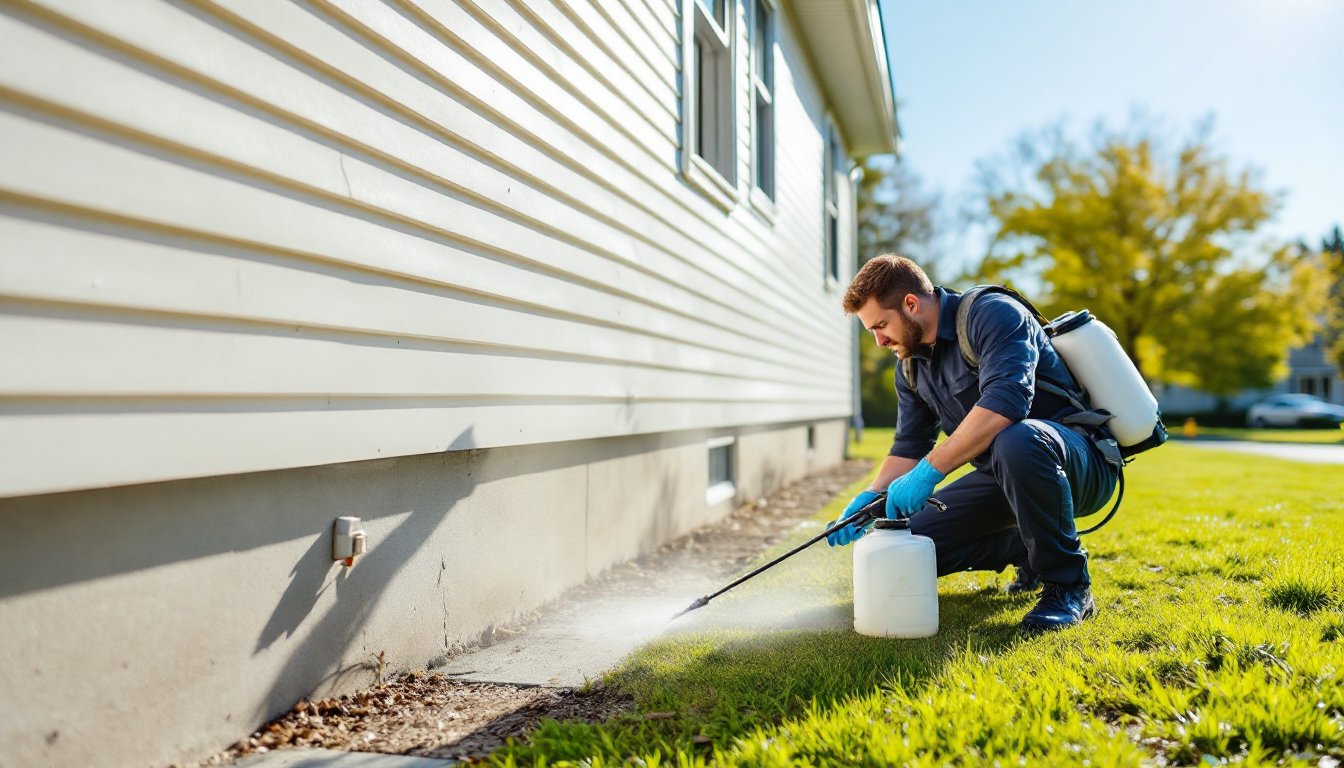
Application methods vary based on product formulation. Liquid concentrates are diluted with water and applied using a pump sprayer or hose-end sprayer, covering foundation walls, window frames, door thresholds, and other potential entry points. Granular products are spread in a band around the perimeter and watered in to activate the active ingredients, providing soil penetration that targets ground-dwelling pests.
The active ingredients, commonly bifenthrin, lambda-cyhalothrin, or deltamethrin, work by disrupting the sodium channels in insect nervous systems, causing paralysis and death. These synthetic pyrethroids have a residual effect lasting 60-90 days under normal conditions, though heavy rain, irrigation, or intense sunlight can reduce effectiveness.
Key Features and Benefits
Clear Defense systems offer several advantages for homeowners tackling pest problems:
Long-lasting protection: Residual formulas continue working for months after application, unlike contact sprays that only kill on contact.
Broad-spectrum control: Single applications target multiple pest types simultaneously, from ants to beetles to spiders.
Reduced interior pesticide use: By stopping pests before they enter, homeowners need fewer indoor treatments, which means less chemical exposure inside living spaces.
Cost-effectiveness: DIY application costs $50-150 per treatment for materials, compared to $150-300 for professional quarterly services. But, understanding pest control rates helps homeowners budget appropriately.
Flexibility: Homeowners control application timing and can adjust treatment frequency based on pest pressure.
The system works best when combined with sanitation practices and exclusion techniques, sealing cracks, removing debris, and eliminating standing water all enhance chemical treatments by reducing pest attractants and entry points.
Common Pests Clear Defense Targets
Clear Defense formulations are engineered to combat the most frequent home invaders. Understanding which pests the system handles effectively helps set realistic expectations.
Ants: Carpenter ants, pavement ants, and odorous house ants all respond well to perimeter treatments. The barrier prevents foraging workers from establishing trails into the home. For severe infestations where colonies nest inside wall voids, perimeter treatment alone may not suffice, direct nest treatment or professional intervention becomes necessary.
Spiders: Common house spiders, wolf spiders, and brown recluses avoid treated areas. Since spiders are predators rather than scavengers, they’re less likely to cross chemical barriers while hunting. Reducing exterior lighting also helps, as lights attract the flying insects spiders feed on.
Roaches: German cockroaches, American cockroaches, and wood roaches are susceptible to pyrethroid barriers, though German roaches often require interior treatments since they breed indoors. Maintaining dry conditions and proper sanitation practices improves treatment effectiveness significantly.
Crickets and earwigs: These moisture-loving pests frequently invade basements and crawl spaces. Perimeter treatments combined with moisture control provide excellent results.
Millipedes and centipedes: These arthropods migrate indoors during wet weather or drought conditions. Barrier treatments stop them at the foundation line.
Fleas and ticks: While Clear Defense products affect these pests, controlling them requires treating lawns and pet resting areas plus to perimeter applications. These pests breed in yards, not homes.
Limitations: Clear Defense does not effectively control rodents (mice, rats), termites, bed bugs, or stored product pests like pantry moths. These require specialized treatment approaches. Similarly, attic pest control for squirrels or raccoons demands exclusion methods rather than chemical barriers.
DIY Application Tips for Homeowners
Successful DIY pest control depends on proper application technique and timing. Rushing through treatment or skipping prep work undermines even the best products.
Safety first: Always wear nitrile gloves, safety glasses, and long sleeves during mixing and application. Synthetic pyrethroids are low-toxicity for mammals but can cause skin irritation. Keep children and pets away from treated areas until surfaces dry completely, typically 2-4 hours for liquid applications.
Equipment selection: A 1-2 gallon pump sprayer with an adjustable nozzle works well for most homeowners. Look for models with coarse droplet settings to minimize drift. For large properties, a hose-end sprayer covers ground faster but requires careful calibration to achieve proper dilution rates.
Mixing: Follow label directions precisely. More concentrate doesn’t mean better results, it wastes product and may cause plant damage. Mix only what you’ll use in one session: diluted solutions lose potency within 24 hours.
Application timing: Treat during dry weather when no rain is forecast for 24 hours. Early morning or evening applications work best because beneficial pollinators are less active and cooler temperatures reduce evaporation. Avoid treating during windy conditions (winds above 10 mph) to prevent drift onto non-target areas.
Coverage patterns: Start at one corner of the house and work methodically around the perimeter. Apply a 4-inch band along the foundation, then work upward to create a 3-foot vertical treatment zone. Pay special attention to cracks, weep holes, utility penetrations, and areas where siding meets the foundation, these are primary entry routes.
Preparing Your Home for Treatment
Prep work determines whether treatments last two months or two weeks. Many standard pest control failures stem from inadequate preparation.
Clear the perimeter: Move firewood, mulch, decorative rocks, and debris at least 2 feet from the foundation. These harbor moisture and pests, compromising barrier effectiveness.
Trim vegetation: Cut back shrubs and tree branches so they don’t contact siding. Overhanging branches create pest highways that bypass ground treatments.
Clean gutters: Clogged gutters overflow during rain, washing away foundation treatments and creating moisture problems that attract pests.
Seal obvious entry points: While treatments stop most pests, large gaps around pipes, vents, or damaged weatherstripping let pests bypass barriers. Use weatherstripping, copper mesh, or polyurethane foam (not expanding foam in visible areas, it looks terrible and degrades in sunlight).
Water foundation plantings before treatment: Moist soil helps granular products penetrate better. Water again lightly after applying granules to activate them, but avoid heavy irrigation that washes products away.
Document problem areas: Note where you’ve seen pest activity. Check these spots a week after treatment to gauge effectiveness. If activity continues, you may have missed a harborage area or need to adjust application technique.
Is Clear Defense Right for Your Home?
Clear Defense works well for homeowners dealing with general pest pressure, the routine invasion of ants, spiders, and occasional insects that plague most properties. It’s particularly effective for homes surrounded by wooded areas or near water sources where pest populations are naturally higher.
The system makes less sense for properties with severe existing infestations. If you’re already dealing with dozens of roaches daily or have active carpenter ant damage, you need more aggressive intervention before establishing a maintenance barrier. Similarly, homes with significant structural issues, large foundation cracks, rotted siding, or moisture problems, require repairs first. Pesticides can’t compensate for major entry points or conditions that attract pests.
Budget considerations matter. DIY Clear Defense costs roughly $150-300 annually for materials if treating quarterly. Professional services run $600-1,200 yearly depending on home size and region. For context, comparing how much pest control costs across different service models helps clarify value.
Homeowners uncomfortable handling pesticides should opt for professional services rather than applying products incorrectly. Misapplication wastes money and potentially harms beneficial insects or causes unintended exposure. Reputable services provide treatment records, Material Safety Data Sheets (MSDS), and should answer questions about product formulations.
For those interested in minimizing chemical use, combining Clear Defense with holistic pest control methods, habitat modification, exclusion, and biological controls, reduces the frequency of chemical applications while maintaining protection. This integrated approach aligns with modern pest management principles.
Regional effectiveness varies. In the Southeast where pest pressure remains high year-round, quarterly treatments make sense. In Northern climates with harsh winters, two treatments (spring and fall) often suffice since many pests become inactive during cold months.
Cleardefense pest control reviews from actual users highlight satisfaction with reduced pest sightings and the convenience of scheduled maintenance. But, reviews also note that initial treatments may not eliminate heavy infestations immediately, Clear Defense excels at prevention more than eradication.
Eventually, Clear Defense suits proactive homeowners willing to invest time in proper application technique and ongoing maintenance. It’s pest control as preventive maintenance rather than emergency response, like changing your oil regularly instead of waiting for the engine to seize. For DIY enthusiasts who handle other home maintenance tasks, adding quarterly pest treatments to the schedule is a natural fit. Those preferring to outsource home care may find professional Clear Defense services a worthwhile investment that provides peace of mind without requiring hands-on involvement.