Table of Contents
ToggleRichmond’s humid subtropical climate creates a year-round buffet for pests. Termites swarm in spring, mosquitoes multiply through summer, and rodents seek shelter when temperatures drop. Homeowners face a constant rotation of invaders, from carpenter ants chewing through siding to German cockroaches setting up shop behind appliances. Professional pest control isn’t just about spraying chemicals, it’s about identifying entry points, understanding pest behavior, and implementing targeted treatments that protect both the home and its occupants. This guide breaks down Richmond’s top-rated pest control services, what separates quality providers from quick-fix operators, and how to match a company’s approach to specific pest problems.
Key Takeaways
- Richmond’s humid subtropical climate demands professional pest control to combat year-round threats like termites, mosquitoes, and rodents that thrive in the James River corridor’s moisture-rich environment.
- Termites cause an average of $3,000 in structural damage before homeowners notice them, making licensed professional inspections with moisture meters and thermal imaging essential for early detection and long-term prevention.
- When choosing pest control in Richmond, prioritize integrated pest management (IPM) protocols that combine chemical treatments with exclusion work and habitat modification rather than quick-fix spraying solutions.
- Local operators excel at customized solutions for Richmond’s diverse neighborhoods, while national chains offer scalability and transferable warranties, so evaluate companies based on experience with your specific pest type and service scope, not brand alone.
- Verify Virginia Department of Agriculture and Consumer Services (VDACS) licensing and insurance coverage before hiring, then request quotes from at least three providers comparing treatment scope, re-treatment guarantees, and annual visit frequency rather than price alone.
- Quality pest control in Richmond requires ongoing management throughout the year, not one-time extermination, because the city’s climate ensures the next pest invader is always seeking entry points into homes.
Why Professional Pest Control Matters in Richmond
Richmond’s geography puts homes at high risk. The James River corridor creates moisture-rich conditions that attract termites, and the city’s mix of older neighborhoods and new construction offers pests every type of shelter. Amateur treatments often fail because they target visible pests without addressing the colony or nest.
Termites cause an average of $3,000 in structural damage before homeowners notice them. A professional inspection includes moisture meters, thermal imaging, and void checks, tools DIYers don’t have. Licensed applicators can also access restricted-use pesticides that deliver long-term control instead of short-term knockdown.
Health risks escalate with certain pests. Rodent droppings carry hantavirus, and cockroach allergens trigger asthma. Professional treatments follow EPA guidelines for product selection and application rates, reducing exposure risks to children and pets. Companies also provide documentation for real estate transactions, many buyers require a termite inspection and clearance letter before closing.
Code compliance matters, too. Richmond follows the Virginia Uniform Statewide Building Code (USBC), which references pest-related standards for wood-destroying insects. If an infestation affects structural members (joists, studs, sills), repairs may require permits and inspections. Professionals can distinguish cosmetic damage from structural issues that need immediate attention.
Top Pest Control Companies in Richmond VA
Richmond’s pest control market includes national franchises, regional firms, and independent operators. Each brings different strengths. National chains like Terminix and Orkin offer broad service networks and transferable warranties, helpful if selling a home. Regional companies often provide faster response times and personalized service, with technicians who know Richmond’s specific pest pressures.
When evaluating providers, verify Virginia Department of Agriculture and Consumer Services (VDACS) licensing. All commercial applicators must hold a valid pesticide business license and employ certified technicians. Check complaint histories through the Better Business Bureau or VDACS enforcement records, which list penalties for unlicensed work or improper chemical use.
Top-rated companies in 2026 typically offer:
• Integrated Pest Management (IPM) protocols that combine chemical treatments with exclusion work and habitat modification
• Free re-treatments between scheduled visits if pests return
• Detailed inspection reports with photos and treatment maps
• Emergency service for stinging insects or active rodent infestations
Pricing varies widely. Expect $100–$300 for an initial inspection and treatment, with quarterly service plans running $400–$800 annually depending on home size and pest type. Termite contracts often include separate fees for monitoring stations and annual renewals.
Local vs. National Chains: Which Is Right for You?
Local operators shine for custom solutions. A family-owned company that’s treated Richmond homes for 20 years knows that Church Hill’s brick row houses have different pest entry points than Short Pump’s vinyl-sided subdivisions. They’re also more likely to adjust treatment protocols mid-contract if the initial approach isn’t working.
National chains excel at scalability and consistency. If transferring a termite bond to a new owner, a nationwide warranty simplifies the process. Larger companies also invest in newer technology, remote monitoring systems for termite bait stations, for example, that send alerts when activity is detected. But, technicians may rotate frequently, and corporate policies can limit a local branch’s flexibility on pricing or service modifications.
For preventive maintenance and common pests (ants, spiders, occasional roaches), either option works if the company is licensed and responsive. For termites or structural infestations, prioritize experience over brand recognition. Ask how many linear feet of termiticide they apply per treatment and whether they sub-contract the work, some franchises outsource termite jobs to third-party applicators.
What to Expect During a Pest Control Service Visit
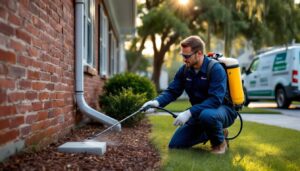
A thorough initial visit lasts 60–90 minutes. The technician should inspect both interior and exterior, not just spray baseboards and leave. Exterior checks focus on the foundation, where most pests enter. Look for the tech examining weep holes in brick veneer, checking crawl space vents, and inspecting roof eaves for wasp nests or gaps where bats enter.
Inside, professionals inspect behind appliances, under sinks, and in attics or basements, anywhere moisture or food sources attract pests. They’ll identify conducive conditions: leaking pipes, torn screens, gaps around utility penetrations. A good technician explains findings in plain language and recommends fixes. If they find termite damage, they should distinguish between active infestation and old, treated damage.
Treatment methods vary by pest. For general pest control, technicians apply liquid residuals to baseboards, entry points, and exterior perimeters. Many now use low-odor, reduced-risk products like pyrethroids or fipronil gels that target pests without broadcasting chemicals throughout living spaces. Termite treatments involve trenching and injecting termiticide (often fipronil or imidacloprid) around the foundation, or installing bait stations that workers carry back to the colony.
Expect instructions on prep work: moving furniture away from walls, removing items from under sinks, and securing pets during application. Re-entry times vary, most modern products allow return within 2–4 hours once surfaces dry. The company should provide a service ticket listing products used, application sites, and safety data sheets (SDS) upon request.
Follow-up visits (usually quarterly) take 20–30 minutes. Technicians reapply exterior barriers, check bait stations, and address new activity. Between visits, most companies offer free callbacks if pests appear, don’t wait until the next scheduled service if ants reappear or you spot a mouse. Techniques like attic pest control may require specialized equipment for insulation treatment or exclusion work in tight spaces.
How to Choose the Best Pest Control Service for Your Home
Start by defining the problem. Reactive treatments for an active infestation differ from preventive plans that keep pests out year-round. If facing termites or carpenter ants, prioritize companies with dedicated wood-destroying insect specialists, general pest techs may lack the training for structural treatments.
Request quotes from at least three providers. Compare scope, not just price. A low bid that includes only interior spot treatments won’t protect like a comprehensive plan covering interior, exterior, and crawl space treatments. Ask whether the quote includes:
• Initial inspection and detailed report
• Interior and exterior treatment on the first visit
• Number of annual visits and what’s covered in each
• Re-treatment guarantee between scheduled services
• Exclusion work (sealing gaps, installing door sweeps) or if that’s billed separately
Check reviews on multiple platforms, not just the company’s website. Angi and Google Reviews reveal patterns. A few complaints about scheduling don’t disqualify a company, but repeated mentions of techs rushing through visits or not returning calls signal problems.
Verify insurance coverage. Pest control companies should carry general liability and professional liability insurance. If a technician damages a hardwood floor during treatment or misapplies product that harms landscaping, insurance covers repairs. Ask for a certificate of insurance, legitimate companies provide it without hesitation.
Understanding pest control rates helps set realistic budgets, especially when comparing treatment frequency and coverage scope. For homeowners interested in supplementing professional service, reviewing some DIY pest control methods offers insight into what’s realistic to handle independently versus when to call in experts.
Contract terms matter. Month-to-month agreements offer flexibility but may cost more per visit. Annual contracts lock in rates and usually include free re-treatments. Read cancellation policies, some companies charge fees if canceling before the contract term ends. Termite agreements often auto-renew, so calendar a reminder to review terms before renewal.
Common Pests in Richmond and Treatment Options
Termites top the threat list. Eastern subterranean termites swarm in March and April, when homeowners spot winged reproductives near windows. Treatment options include liquid termiticides applied to the soil around the foundation (creating a chemical barrier) or bait systems like Sentricon or Advance that workers consume and share with the colony. Liquid treatments provide immediate protection: baits take longer to eliminate the colony but involve less soil disruption. Annual inspections are essential, termites can reinfest if the barrier breaks down or if new construction (like a deck addition) creates untreated access points.
Mosquitoes thrive in Richmond’s humidity. Professional control involves treating standing water sources with larvicides (products containing Bti, a bacteria that kills larvae) and applying barrier sprays to shrubs and shaded areas where adults rest. Treatments last 3–4 weeks, requiring reapplication through mosquito season (April through October). Technicians should identify and eliminate breeding sites, clogged gutters, birdbaths, low spots that collect rainwater.
Rodents (Norway rats, house mice) enter homes in fall. Professionals use snap traps and rodenticide bait stations placed in attics, crawl spaces, and along travel routes. Exclusion work is critical: sealing gaps around pipes, installing 1/4-inch hardware cloth over vents, and trimming tree branches that provide roof access. Poison alone won’t solve the problem if entry points remain open. Some companies offer thermal imaging inspections to locate nest sites inside walls.
Cockroaches, particularly German roaches, infest kitchens and bathrooms. Treatment combines gel baits applied to harborage areas with insect growth regulators (IGRs) that disrupt reproduction. German roaches resist many over-the-counter sprays, making professional products necessary. Sanitation is non-negotiable: technicians can’t solve roach problems if food waste and dirty dishes provide constant food sources.
Bed bugs require specialized heat treatment or multiple chemical applications. Expect to pay $500–$1,500 depending on infestation severity. Preparation is extensive: laundering all bedding and clothing, vacuuming thoroughly, and often discarding heavily infested furniture. Residents using standard pest control measures for general pests should understand that bed bugs need dedicated protocols beyond typical service visits.
Ants present varied challenges. Odorous house ants and carpenter ants require different approaches. Carpenter ants nest in damp wood and indicate moisture problems, treating the ants without fixing the leak just delays recolonization. Professionals use non-repellent sprays that ants can’t detect, allowing them to track the product back to nests hidden in walls or under slabs.
For eco-conscious homeowners, holistic pest control options integrate least-toxic products with environmental modifications, reducing chemical dependency while maintaining effectiveness. Having the right pest control equipment ensures technicians can access and treat all problem areas properly.
Conclusion
Selecting pest control in Richmond means matching a company’s expertise to the home’s specific threats. Termite-prone neighborhoods near wooded areas need different coverage than downtown condos battling occasional roaches. Verify licensing, compare treatment scope beyond price alone, and don’t ignore red flags like rushed inspections or vague contracts. A quality provider treats pest control as ongoing management, not one-time extermination, because in Richmond’s climate, the next invader is always looking for a way in.