Table of Contents
ToggleWhen pests invade a home, the clock starts ticking. Termites chew through structural framing, rodents contaminate insulation, and roaches spread pathogens across kitchen counters. That’s when homeowners start searching for reliable pest control, and “Brothers Pest Control” surfaces as one of many regional service providers operating across the U.S. But what does the name actually represent, and how do you know if a Brothers Pest Control company in your area delivers professional service or just another franchised sales pitch? This guide walks through what Brothers Pest Control typically offers, how to evaluate any pest management provider, and when it makes sense to call in professionals versus handling treatment yourself.
Key Takeaways
- Brothers Pest Control is not a single national brand but rather multiple independent regional companies, so verify licensing, insurance, and customer reviews before hiring any local provider.
- Professional pest control protects your home’s structural integrity and indoor air quality, as termites cause over $5 billion in annual damage and rodents compromise insulation and electrical safety.
- Always demand written estimates and contracts that specify pest species, treatment methods, number of visits, and warranty terms—avoid companies that quote prices over the phone without property inspection.
- Termite, bed bug, and large rodent infestations require professional intervention with specialized equipment; DIY methods fail because homeowners cannot access critical treatment zones.
- Annual professional pest control contracts cost $400–$800 for general service and include guaranteed results and liability coverage, making them cost-effective compared to repeated DIY treatments.
- Maintain a pest-free home by sealing entry points with copper mesh, managing moisture, storing food in sealed containers, and trimming vegetation at least 2 feet from your house foundation.
What Is Brothers Pest Control and Why It Matters
“Brothers Pest Control” isn’t a single national brand like Orkin or Terminix. Instead, it’s a business name used by multiple independent pest management companies operating regionally, often family-owned operations serving specific metro areas or counties. You’ll find Brothers Pest Control in Texas, California, Florida, and other states, each as separate entities with their own service standards, licensing, and insurance coverage.
This fragmentation matters because the quality of service varies widely. One Brothers Pest Control might employ certified entomologists and follow integrated pest management (IPM) protocols, while another could be a two-person operation with a pickup truck and generic spray equipment. Before signing any contract, verify that the specific company holds state pest control operator licenses, carries general liability and workers’ comp insurance, and maintains positive customer reviews with actual project details, not just five-star ratings with no commentary.
From a home maintenance perspective, professional pest control protects structural integrity and indoor air quality. Termites cause over $5 billion in property damage annually in the U.S., and most homeowner’s insurance policies don’t cover the repairs. Rodent infestations compromise attic insulation (reducing R-value by up to 30%) and chew through electrical wiring, creating fire hazards. A qualified pest control provider identifies the pest species, locates entry points, and applies targeted treatments that reduce chemical exposure compared to DIY broadcast spraying.
Services Offered by Brothers Pest Control Companies
Most Brothers Pest Control operations provide a standard suite of residential and commercial pest management services. Offerings typically include:
- General Pest Control: Quarterly or bi-monthly treatments for ants, spiders, silverfish, earwigs, and cockroaches using perimeter spray applications and granular barriers.
- Termite Inspections and Treatment: Liquid termiticides (like Termidor or Taurus SC) injected into soil around foundation perimeters, or bait station systems (Sentricon, Advance) for subterranean termites. Drywood termite fumigation requires tenting and vikane gas, this is structural work that takes 24-48 hours and mandates temporary evacuation.
- Rodent Exclusion and Control: Snap traps, glue boards, and exterior bait stations combined with exclusion work, sealing gaps larger than ¼ inch with copper mesh, sheet metal, or expanding foam rated for pest control.
- Bed Bug Heat Treatment or Chemical Applications: Heat treatment raises room temperatures to 130°F for 4+ hours to kill all life stages. Chemical treatments require multiple visits (usually three applications over 4-6 weeks) and homeowner cooperation with laundering and decluttering.
- Wildlife Management: Some companies handle larger nuisances like raccoons, squirrels, or opossums, trapping, exclusion, and attic cleanup. This often requires separate licensing.
Not every Brothers Pest Control offers all services. Smaller outfits may subcontract termite work or skip wildlife altogether. Ask upfront which services they perform in-house and whether they carry the required structural pest control or wood-destroying organism (WDO) license for termite inspections, lenders require these for real estate transactions.
Companies embracing holistic pest management approaches may also offer habitat modification consulting, helping homeowners address moisture issues, trim vegetation, and eliminate harborage sites before applying any pesticides.
How to Evaluate a Brothers Pest Control Provider
Choosing the right pest control company requires more diligence than hiring a lawn service. Start with these verification steps:
- Licensing and Certification: Every state mandates pest control operator licenses. Request the license number and verify it’s current through your state’s department of agriculture or structural pest control board. Technicians should carry applicator certifications specific to the pest categories they treat.
- Insurance Coverage: Confirm they hold general liability insurance (minimum $1 million) and workers’ compensation. If a technician falls through your ceiling while treating an attic, you don’t want to be liable.
- Treatment Methods and Products: Ask what active ingredients they use and whether they follow IPM principles, starting with non-chemical methods (exclusion, sanitation) before applying pesticides. Reputable companies provide Safety Data Sheets (SDS) for any chemicals applied indoors.
- Customer References and Online Reviews: Check Google, Yelp, and the Better Business Bureau. Look for patterns: Do customers mention follow-up visits when initial treatments fail? Are there complaints about high-pressure sales tactics or auto-renewals?
- Written Estimates and Contracts: Everything should be in writing, pest species targeted, treatment methods, number of visits, warranty terms, and cancellation policy. Avoid companies that quote over the phone without inspecting the property.
According to industry cost analysis platforms, pest control pricing varies widely by region, so comparing multiple local quotes helps establish fair market rates for your area.
Cost Considerations and Service Plans
Pest control pricing depends on treatment type, property size, and infestation severity. Here’s what typical services run:
- General Pest Control (Quarterly Service): $100–$300 per visit for a 1,500–2,500 sq. ft. home. Many companies offer annual contracts with bundled pricing ($400–$800/year) that include unlimited re-treatments between scheduled visits.
- Termite Treatment: Liquid barrier treatments range from $1,200–$2,500 depending on linear footage of foundation and soil conditions. Bait systems run $1,500–$3,500 for installation plus $300–$500 annual monitoring fees.
- Rodent Control: Initial service (inspection, trapping, exclusion) runs $300–$600, with follow-up visits at $100–$200 each. Attic cleanup and insulation replacement (if contaminated) add $1,500–$4,000.
- Bed Bug Treatment: Heat treatment costs $1,500–$3,000 for a moderate infestation in a 2-bedroom home. Chemical treatments run $500–$1,500 but require multiple applications.
These figures vary significantly by region and market conditions. Professional cost guides provide localized estimates, but always get three written quotes before committing. Ask about warranties, quality companies guarantee their work for 30–90 days and return for free re-treatments if pests return within the warranty window.
Beware of unusually low bids. Some companies lowball initial quotes, then upsell unnecessary treatments or lock customers into multi-year contracts with steep cancellation fees. Read contracts carefully before signing, and don’t let anyone pressure you into same-day decisions.
DIY Pest Control vs. Hiring Brothers Pest Control Professionals
Homeowners can handle many common pest problems with DIY pest control methods, but some situations demand professional intervention. Here’s when to tackle it yourself versus calling in pros:
Good DIY Candidates:
- Occasional Ants or Spiders: Perimeter spray with bifenthrin or deltamethrin (available at home centers as Ortho Home Defense or Talstar P) controls exterior populations. Reapply every 60–90 days.
- Small Rodent Activity: Snap traps baited with peanut butter work for one or two mice. Place traps perpendicular to walls where you see droppings.
- Preventive Maintenance: Sealing cracks with silicone caulk, installing door sweeps, and eliminating standing water prevent most infestations before they start.
Call Professionals For:
- Termites: DIY termite treatment fails because homeowners can’t access critical treatment zones (under slab foundations, inside wall voids). Professionals use specialized equipment like soil treatment rigs and moisture meters to locate colonies.
- Bed Bugs: These require coordinated heat treatment or residual insecticides applied in cracks and crevices where bugs hide. Missing one pregnant female means reinfestation within weeks.
- Large Rodent Infestations: If you’re catching multiple rodents daily or finding droppings throughout the house, you likely have a colony in wall voids or subfloor spaces. Professionals use inspection cameras and thermal imaging to locate nests.
- Wood-Destroying Pests: Carpenter ants, powderpost beetles, and wood-boring beetles require identification by trained entomologists and targeted applications, often involving drilling and injecting insecticides into structural members.
For smaller issues, boric acid-based products offer effective, low-toxicity control for ants and cockroaches when applied correctly in cracks and crevices. But if you’ve tried DIY methods for 2–4 weeks without progress, or if you’re dealing with pests that damage structures or spread disease, professional help pays for itself in faster resolution and reduced risk.
Cost comparison: A year of quarterly DIY perimeter treatments (buying concentrate and a pump sprayer) runs about $60–$100 in materials. Professional service costs $400–$800 annually but includes liability coverage, guaranteed results, and treatments you can’t legally purchase (restricted-use pesticides like Termidor require licensed applicators).
What to Expect During Your First Brothers Pest Control Visit
A professional initial pest control visit should take 45–90 minutes, depending on property size and infestation severity. Here’s the typical process:
-
Inspection: The technician walks the property interior and exterior, checking common entry points (foundation cracks, utility penetrations, vent screens), moisture sources (leaky pipes, poor drainage), and active pest evidence (droppings, shed skins, damage). Expect them to inspect the attic, crawlspace, garage, and perimeter landscape. Quality technicians take photos and notes.
-
Identification and Recommendations: They should identify the pest species (not just guess) and explain how the infestation likely started. If structural repairs are needed, like fixing a roof leak attracting carpenter ants or replacing rotted fascia boards, they’ll point it out. These repairs are typically separate from pest treatment costs.
-
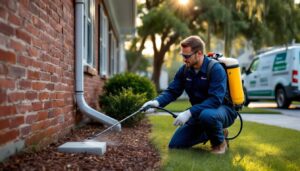
Treatment Application: For general pest service, technicians spray liquid residual insecticide along baseboards, door frames, window sills, and other pest entry points indoors. Exterior treatment includes foundation perimeter spray (up to 3 feet high and 3 feet out), eaves, door/window frames, and granular applications in landscape beds. Application equipment includes backpack sprayers (for liquids) and hand spreaders (for granules).
-
Documentation and Safety Information: You’ll receive a service ticket listing products applied, active ingredients, and re-entry times (usually 2–4 hours for interior treatments). Keep this paperwork, it’s required for real estate disclosures in many states.
-
Follow-Up Schedule: Most companies schedule the next visit before leaving and provide a phone number for urgent callbacks if pests return between services.
Safety Precautions: Professional applicators should wear appropriate PPE (gloves, safety glasses, respirators when required). You and pets should vacate treated areas until surfaces dry (typically 1–2 hours). If anyone in the household has chemical sensitivities, ask about low-odor formulations or botanical alternatives.
If the technician rushes through in 15 minutes, skips the inspection, or can’t answer questions about the products used, that’s a red flag. According to professional contractor platforms, thoroughness during initial visits correlates strongly with long-term customer satisfaction and effective pest control outcomes.
Maintaining a Pest-Free Home After Professional Treatment
Professional pest control creates a defensive barrier, but homeowners must maintain the conditions that keep pests out. Here’s what works:
Ongoing Maintenance Tasks:
- Seal Entry Points: Caulk cracks in foundation walls, install door sweeps on exterior doors (leave no gap larger than ⅛ inch), and repair torn window screens. Use copper mesh or steel wool to plug gaps around plumbing and electrical penetrations, spray foam alone won’t stop rodents.
- Manage Moisture: Fix leaky pipes, improve crawlspace ventilation, and ensure gutters drain away from the foundation. Many pests (termites, carpenter ants, silverfish) are attracted to excess moisture.
- Eliminate Food Sources: Store pantry items in sealed containers (plastic or glass with tight lids), clean up crumbs daily, and don’t leave pet food out overnight. Exterior trash cans should have tight-fitting lids and be stored away from the house.
- Landscape Modifications: Trim tree branches and shrubs back at least 2 feet from the house, remove mulch or leaf litter touching the foundation, and store firewood at least 20 feet away and off the ground on a rack.
When to Call for a Re-Treatment:
Most pest control warranties cover 30–90 days. Call your provider immediately if:
- You see active pests in areas that were treated (dead pests for the first few days post-treatment are normal).
- You notice new damage (fresh sawdust from carpenter ants, chewed wires from rodents).
- You find evidence of a different pest not covered in the original treatment.
Don’t wait until the next scheduled visit if you see problems. Reputable companies return for free re-treatments within the warranty period.
Supplemental DIY Measures:
Between professional visits, maintain treated areas with light cleaning (avoid heavy scrubbing that removes residual insecticide from baseboards). For homeowners who prefer hands-on involvement, investing in basic pest control equipment like a quality sprayer and monitoring traps provides early warning of new activity. Review general pest control tips regularly to stay ahead of seasonal pest pressures.
For severe or recurring infestations, understand typical pest control rates in your region so you can budget for more intensive treatment plans if needed.
Consistent monitoring and maintenance, not just quarterly treatments, keeps homes pest-free long-term. Treat professional pest control as the foundation of your strategy, and build on it with smart prevention habits that address the conditions attracting pests in the first place.