Table of Contents
ToggleSummer means backyard barbecues, open windows, and unfortunately, an army of pests looking for food, water, and shelter. Warmer temperatures don’t just wake up homeowners, they trigger breeding cycles, accelerate insect activity, and send everything from ants to mosquitoes into overdrive. The good news? Most summer pest problems are preventable with the right approach. This guide walks through the most common culprits, proven prevention tactics, DIY solutions that actually work, and when it’s time to call in a pro.
Key Takeaways
- Summer pest control starts with prevention: seal cracks, repair screens, and eliminate standing water where insects breed and multiply rapidly in warm temperatures.
- Common summer pests like ants, mosquitoes, and wasps thrive when temperatures exceed 70°F, making identification and early intervention critical to stopping infestations before they spread.
- DIY solutions such as vinegar sprays for ants, permethrin for mosquitoes, and diatomaceous earth for roaches can effectively manage mild pest problems when applied correctly and safely.
- Professional pest control is necessary for termites, bed bugs, rodents, and large wasp nests, as these require specialized equipment and expertise that DIY methods cannot replicate.
- Regular maintenance—including gutter cleaning, trash management, and moisture control—reduces pest attractants and can prevent expensive infestations from developing throughout the season.
Why Summer Brings Out the Worst Pests
Insects are cold-blooded. When temperatures climb above 70°F, their metabolic rates increase, which means they eat more, reproduce faster, and move around more aggressively. A single ant colony can produce thousands of workers in a matter of weeks during peak summer months.
Humidity plays an equally big role. Moisture attracts pests like termites, roaches, and mosquitoes. A damp crawl space or clogged gutter becomes prime real estate for breeding. Combined with longer daylight hours, pests have more time to forage, which is why you’ll see a spike in activity from late May through early September.
Human behavior matters too. Open doors, screen tears, outdoor dining, and garbage left out overnight all create easy access. Many of the most common home improvement tips from sites like The Spruce emphasize sealing and maintenance during warmer months for exactly this reason.
Common Summer Pests and How to Identify Them
Ants are relentless. Look for trails along baseboards, countertops, or exterior foundation walls. Carpenter ants are the ones to worry about structurally, they excavate wood to build nests, leaving behind frass (sawdust-like debris). Odorous house ants are smaller and emit a rotten coconut smell when crushed.
Mosquitoes breed in standing water, bird baths, clogged gutters, tarps, or flower pot saucers. Females need blood to produce eggs, and a single puddle can spawn hundreds. They’re most active at dawn and dusk.
Wasps and hornets build nests under eaves, in attics, or inside wall voids. If you’re dealing with aggressive stinging insects, targeted wasp control strategies can prevent painful encounters during outdoor gatherings.
Flies multiply fast in garbage, compost, and pet waste. Fruit flies breed in sink drains and overripe produce. Houseflies carry bacteria and can contaminate food surfaces.
Cockroaches prefer dark, moist areas, behind appliances, under sinks, or in basements. German roaches are tan with two dark stripes: American roaches are larger and reddish-brown. Both can trigger allergies and spread pathogens.
Ticks lurk in tall grass, leaf litter, and wooded edges. These bloodsuckers pose serious health risks, transmitting Lyme disease and other infections. Homeowners with yards near wooded areas should carry out tick prevention measures to protect family and pets.
Spiders aren’t technically insects, but they’re unwelcome guests nonetheless. Most are harmless and actually eat other pests, but black widows and brown recluses require caution.
Preventive Measures to Keep Pests Away
Prevention beats reaction every time. Most infestations start because pests find an easy way in and something worth staying for.
Seal Entry Points and Repair Damage
Inspect the exterior of your home twice a year, spring and fall. Use a caulking gun with silicone or polyurethane caulk to seal cracks around windows, doors, and foundation penetrations (pipes, vents, utility lines). Even a gap the width of a credit card is enough for ants and roaches.
Check weatherstripping on doors and garage thresholds. Replace worn-out strips with adhesive-backed foam or rubber sweeps. For gaps under entry doors, install a door sweep with at least a ½-inch brush or vinyl flap.
Repair torn or damaged window screens. Use 18×16 mesh fiberglass or aluminum screening (18 wires per inch horizontally, 16 vertically) for standard insect protection. Patch kits work for small tears, but replace screens with large holes outright.
Vent covers and chimney caps should have mesh screens. Use ¼-inch hardware cloth over gable vents and crawl space openings to keep out rodents and larger insects.
Eliminate Standing Water and Food Sources
Empty any container that holds water weekly, gutters, downspout extensions, planters, tarps, kiddie pools, and pet bowls. Mosquitoes can breed in as little as a bottle cap of water.
Clean gutters at least twice a year. Clogged gutters overflow, creating damp conditions along fascia boards and soffits, prime territory for carpenter ants and termites. Consider installing gutter guards (mesh or reverse-curve styles) to reduce debris buildup.
Store firewood at least 20 feet from the house and elevate it off the ground on a rack. Wood piles attract termites, carpenter ants, and spiders.
Keep trash cans sealed with tight lids. Rinse recyclables before tossing them. If possible, store garbage cans in a shed or garage rather than directly against the house.
Indoors, wipe down counters nightly and sweep floors regularly. Don’t leave pet food out overnight. Store dry goods (flour, cereal, pasta) in airtight plastic or glass containers, cardboard is an open invitation for pantry pests.
Fix leaky faucets, pipes, and toilets. Roaches and silverfish thrive in moisture. Use a dehumidifier in basements or crawl spaces if relative humidity exceeds 50%.
DIY Pest Control Solutions That Actually Work
Not every pest problem requires an exterminator. Here are field-tested methods for common summer invaders.
For ants: Mix equal parts white vinegar and water in a spray bottle. Spray trails and entry points to disrupt scent markers. For longer-lasting control, use boric acid bait stations. These work by attracting ants with a sweet bait mixed with boric acid powder, which they carry back to the colony.
For mosquitoes: Apply a permethrin-based spray to yard perimeters, shrubs, and tall grass. Permethrin is a synthetic insecticide that remains effective for several weeks. Treat standing water sources you can’t eliminate (like ponds) with BTI dunks (Bacillus thuringiensis israelensis), a biological larvicide safe for fish and pets.
For flies: Set up fly tape or UV light traps in garages and near entry doors. For fruit flies, place a jar with apple cider vinegar and a drop of dish soap near the sink, they’ll drown in the solution. Clean drains with a stiff brush and enzyme-based cleaner to eliminate breeding sites.
For roaches: Dust cracks, crevices, and behind appliances with diatomaceous earth (DE), food-grade. DE is a fine powder that damages insects’ exoskeletons, causing dehydration. Wear a dust mask when applying, it’s non-toxic but irritating to lungs. Place gel baits in cabinets and under sinks for ongoing control.
For wasps: If the nest is small (golf ball-sized or smaller) and accessible, spray it at dusk with a pyrethrin-based wasp killer from a distance of 10–15 feet. Wear long sleeves, pants, and goggles. For larger or hidden nests, don’t risk it, call a pro.
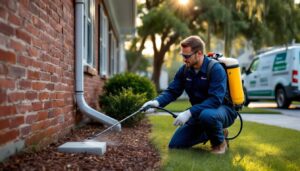
For spiders: Vacuum webs and egg sacs regularly. Spray a perimeter treatment with bifenthrin or lambda-cyhalothrin around door frames, window sills, and foundation walls. These are residual insecticides that remain active for 30–90 days. Proper pest control equipment, including a pump sprayer and protective gloves, makes application safer and more effective.
Safety note: Always read product labels. Wear gloves, goggles, and a respirator when handling concentrated insecticides. Keep kids and pets away from treated areas until dry.
When to Call a Professional Exterminator
Some situations are beyond DIY. Here’s when to pick up the phone.
Termites: If you see mud tubes on foundation walls, hollow-sounding wood, or discarded wings near windows, you’ve got termites. Treatment requires specialized equipment (soil injectors, foam applicators) and often involves trenching around the foundation. This is not a DIY job.
Bed bugs: These are notoriously hard to eliminate. They hide in seams, cracks, and electrical outlets. Effective treatment usually requires heat treatment (raising room temperature to 120°F+) or fumigation, both require professional equipment.
Rodents: If you hear scratching in walls or see droppings in the attic or basement, you might have mice or rats. Professionals use exclusion methods, bait stations, and attic pest control techniques to remove nests and seal entry points. Rodents chew wiring and insulation, creating fire hazards and structural damage.
Large wasp or hornet nests: Anything bigger than a softball or located in a wall void should be handled by someone with protective gear and commercial-grade knockdown spray. Better Homes & Gardens emphasizes safety-first approaches for yard hazards like aggressive stinging insects.
Recurring infestations: If you’ve treated for the same pest three times and it keeps coming back, there’s likely a hidden source, moisture intrusion, structural damage, or an entry point you’re missing. Pros have thermal cameras, moisture meters, and borescopes to diagnose the root cause.
Health concerns: If anyone in the household has asthma, allergies, or a compromised immune system, professional-grade treatments with lower-toxicity options (like holistic pest control methods) may be safer than mixing and spraying chemicals yourself.
Cost varies widely by region and pest type. Expect $150–$300 for a one-time treatment (ants, roaches) and $300–$1,500+ for termites or bed bugs, depending on square footage and infestation severity. Get quotes from at least two licensed providers.
A good starting point is checking comprehensive DIY pest control guides to determine whether a problem is manageable on your own or requires professional intervention. Many pest prevention practices can reduce the need for costly treatments down the line.