Table of Contents
ToggleTallahassee’s humid subtropical climate creates a year-round invitation for pests. Between the relentless summer heat, afternoon thunderstorms, and mild winters, homeowners face everything from subterranean termites tunneling through floor joists to German cockroaches nesting in wall voids. Unlike northern climates where cold weather offers a seasonal reprieve, Florida’s pest pressure never really stops. Understanding which invaders pose the biggest threat and how to address them, before they compromise structural integrity or health, separates a well-maintained home from one that becomes a buffet for every critter within a quarter-mile radius.
Key Takeaways
- Tallahassee’s humid subtropical climate enables year-round pest activity, making prevention and early detection essential to protect structural integrity and health.
- Subterranean termites pose the greatest wood-destroying threat in the region, consuming roughly one foot of 2×4 lumber annually; professional treatment with licensed applicators is required by Florida law.
- Sealing entry points larger than a dime, eliminating moisture sources, and removing food debris prevent most pest invasions without requiring professional intervention.
- Tallahassee pest control strategies should match your situation: DIY perimeter treatments for prevention, professional help for termites and structural damage, and quarterly service plans for ongoing pressure in wooded neighborhoods.
- Integrated Pest Management (IPM) combining chemical treatments with habitat modifications—like rerouting condensate drains and adjusting mulch placement—offers the most effective long-term pest control solution.
- Annual termite contracts costing $800–$2,500 initially are near-essential in Tallahassee, as undetected colonies can cause tens of thousands in damage despite prevention efforts.
Common Pests Threatening Tallahassee Homes
Termites and Wood-Destroying Insects
Subterranean termites dominate the threat landscape in Tallahassee. They build mud tubes up foundation walls and sill plates, accessing structural lumber from below. A mature colony can consume roughly a foot of 2×4 per year, not catastrophic overnight, but devastating if left unchecked for five or ten years. Formosan termites, an aggressive subspecies, are also present in North Florida. They build aerial colonies in wall cavities and don’t always need ground contact.
Inspect crawl spaces and slab edges twice a year. Look for pencil-width mud tubes along concrete, sagging floors, or hollow-sounding baseboards. Wood that probes soft with a flathead screwdriver indicates active or recent damage. Treatment typically involves liquid termiticides (such as fipronil or imidacloprid) trenched around the foundation perimeter, or bait station systems that deliver slow-acting toxins back to the colony. Both methods require licensed applicators in Florida.
Carpenter ants and powderpost beetles also damage wood, but differently. Carpenter ants excavate galleries for nesting, not nutrition, they prefer moist or already-decayed lumber. Powderpost beetles leave tiny exit holes and fine, talc-like frass. Neither matches termites for sheer destructive speed, but both signal moisture problems that need correction.
Rodents, Ants, and Cockroaches
Roof rats (Rattus rattus) are Tallahassee’s most common rodent pest. They nest in attics, running along utility lines and overhanging tree branches. Signs include droppings (spindle-shaped, about ½ inch long), gnawed electrical wiring, and scratching sounds at night. Snap traps baited with peanut butter work for small infestations, but attic infestations often require exclusion work, sealing gaps larger than ¼ inch around rooflines, vents, and eaves with galvanized steel mesh or hardware cloth. Trim tree limbs back at least 6 feet from rooflines.
Fire ants build mounds in lawns, often near irrigation heads or along foundation edges. Their venom causes painful, pustule-forming stings. Treat mounds with bait granules (such as hydramethylnon or indoxacarb) broadcast in late afternoon when foragers are active. Avoid contact treatments that only kill surface ants, you need to reach the queen.
Argentine ants and ghost ants invade kitchens in trailing columns. They nest outdoors but forage inside for moisture and sweets. Non-repellent liquid treatments (such as fipronil) applied to exterior foundation perimeters intercept foragers before they enter. Inside, bait gels targeting protein or sugar preference work better than aerosol sprays, which scatter colonies.
German cockroaches reproduce indoors, favoring kitchens and bathrooms. A single female produces 30–40 eggs every few weeks. Gel baits placed in cracks near appliances and under sinks are highly effective when combined with caulking entry points. American cockroaches (often called palmetto bugs) are larger, fly short distances, and typically enter from outdoors through gaps around doors or plumbing penetrations. Seal those gaps with silicone caulk or weatherstripping.
DIY Pest Prevention Strategies for Tallahassee Homeowners
Prevention beats reaction every time. Most pest problems start with access, moisture, or food sources homeowners can control.
Seal entry points. Walk your home’s perimeter and mark every gap wider than a dime. Common trouble spots include:
- Gaps around air conditioning line penetrations
- Weep holes without screens (use copper mesh, not steel wool, it rusts)
- Door sweeps with ½-inch clearance (replace with aluminum or nylon sweeps that seal to ⅛ inch)
- Soffit vents without screens
- Pipe chases and utility entries
Use expanding polyurethane foam for gaps up to 1 inch, silicone caulk for cracks, and galvanized steel mesh for larger openings that need ventilation.
Eliminate moisture. Tallahassee’s humidity alone doesn’t cause infestations, but standing water and damp wood do. Fix leaking hose bibs, condensate drains, and roof flashing promptly. Slope soil away from the foundation at a minimum 5% grade (6 inches of drop per 10 feet). Clean gutters quarterly to prevent overflow that saturates siding and sill plates. In crawl spaces, consider a 6-mil polyethylene vapor barrier across the dirt floor if moisture readings exceed 60% relative humidity.
Remove food and debris. Store pantry goods in airtight polycarbonate or glass containers. Empty kitchen trash nightly into sealed outdoor bins. Sweep under appliances monthly, crumbs behind stoves and refrigerators feed German cockroaches for weeks.
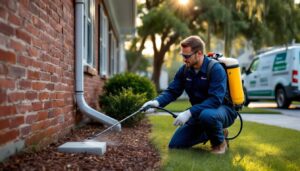
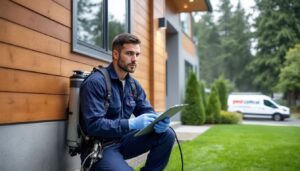
Outdoors, keep firewood stacked at least 20 feet from the house on a raised rack. Mulch beds should be no deeper than 3 inches and pulled back 12 inches from the foundation, thick mulch against siding invites subterranean termites and carpenter ants. Property owners can apply pest control equipment like handheld sprayers for perimeter treatments, but always wear nitrile gloves, safety glasses, and a respirator rated for pesticides (N95 masks don’t filter vapors).
Landscape smartly. Trim shrubs 18 inches away from exterior walls to increase airflow and reduce harborage. Avoid planting densely around HVAC condensers. Replace decorative bark mulch with pine straw or gravel in beds adjacent to the foundation, they’re less attractive to pests and dry faster.
For outdoor living spaces, ideas from Gardenista often emphasize lush plantings, but remember that dense foliage and standing water in saucers create mosquito breeding sites and rodent cover. Balance aesthetics with airflow.
When to Call a Professional vs. Handling It Yourself
DIY works for prevention and minor, localized problems. But certain situations demand licensed expertise, not because the homeowner lacks skill, but because the tools, materials, or risks exceed what’s practical or legal.
Call a pro for:
- Termite infestations. Florida law requires licensed operators for termiticide application. Treatment involves trenching around the foundation perimeter and injecting hundreds of gallons of diluted chemical. Equipment alone (tank sprayers, soil injection rods) costs thousands. More importantly, incorrect application leaves gaps that allow reinfestation. If you’re considering treatment costs, looking into what to expect for pest control rates helps budget appropriately.
- Structural pest damage. If floor joists, rafters, or load-bearing studs show significant hollowing, you need both a pest control operator and potentially a structural engineer. Replacing compromised framing isn’t cosmetic, it affects building safety and often requires permits.
- Large rodent infestations. A few droppings in the garage? Set traps yourself. But if you hear constant activity in walls, find nests in insulation, or smell ammonia-like urine odor, the population is established. Professionals use tracking powders, multi-catch traps, and exclusion techniques that prevent re-entry. They’ll also identify and seal entry points you’d miss.
- Bed bugs. These require heat treatment (raising room temperature to 120°F for hours) or specialized pesticides unavailable to consumers. DIY attempts usually spread the infestation to other rooms.
- Stinging insects in walls or eaves. Yellow jacket nests inside wall voids or paper wasp colonies under second-story eaves pose fall and sting risks. Professionals have the PPE (full bee suits, face shields) and extension equipment to treat safely.
Handle yourself:
- Perimeter pest prevention. Consumer-grade granular or liquid treatments with bifenthrin or lambda-cyhalothrin applied quarterly around the foundation keep ants, roaches, and spiders from entering. Mix per label directions and apply with a pump sprayer in a 3-foot band along the foundation.
- Ant mound treatment. Broadcast bait granules or drench individual mounds with labeled insecticides. Wear gloves and avoid contact, fire ant stings can trigger anaphylaxis in sensitive individuals.
- Mouse or rat control in accessible areas. If you can see entry points and activity is limited, set snap traps along walls (rodents travel edges, not open floor). Bait with peanut butter, bacon, or nesting material like cotton. Check daily and dispose of carcasses in sealed bags. Seal entry holes with steel wool stuffed tight, then covered with hydraulic cement or caulk.
- Routine inspections. Twice-yearly crawl space and attic walkthroughs catch problems early. Bring a headlamp, flathead screwdriver (for probing wood), and smartphone camera to document conditions.
Tallahassee’s rodent control experts can provide inspections that identify entry points often missed during routine checks. If you’re weighing costs, understanding typical service pricing helps determine whether DIY savings justify the time investment.
Choosing the Right Pest Control Approach for Your Home
Tallahassee homeowners typically choose between one-time treatments, quarterly service plans, or annual termite contracts. Each fits different situations.
One-time treatments address immediate problems, an ant colony in the kitchen, a wasp nest on the deck. Costs range from $150 to $400 depending on pest type and severity. This approach makes sense for isolated incidents but doesn’t prevent future invasions. If you’re seeing the same pest twice a year, you’re spending more than a prevention plan would cost.
Quarterly pest control plans (often branded as standard pest control) include perimeter treatments every 90 days plus interior spot treatments as needed. Expect $80 to $150 per visit. Contracts usually cover ants, roaches, spiders, and occasional invaders like silverfish. Termites and rodents typically require separate agreements. These plans work well for homes in wooded areas or neighborhoods with persistent pest pressure. The tech applies residual insecticides to foundation perimeters, eaves, door frames, and garage edges. Interior treatment focuses on cracks, baseboards, and behind appliances.
Annual termite contracts combine an initial treatment (either liquid or bait stations) with yearly inspections. Initial treatment costs $800 to $2,500 depending on home size and method. Annual renewals run $150 to $300 and include a damage warranty, if termites return and cause new damage, the company pays for repairs up to the policy limit. This is near-essential in Tallahassee. Subterranean termites are present in nearly every neighborhood, and a single undetected colony can cause tens of thousands in structural damage.
Integrated Pest Management (IPM) combines chemical treatments with habitat modification and exclusion. It’s the most effective long-term strategy. A good pest control operator doesn’t just spray, they identify conducive conditions (moisture intrusion, landscape contact, unsealed entry points) and recommend corrections. For example, they might note that your HVAC condensate line drains directly onto a mulch bed adjacent to the foundation, creating constant moisture that attracts ants and termites. Rerouting that drain 10 feet away solves more than any pesticide application.
When comparing companies, ask:
- Which products do they use, and what are the active ingredients? (Avoid vague answers like “industry-standard materials.”)
- Do they offer a re-treatment guarantee if pests return between visits?
- Are technicians state-licensed? (Florida requires pest control operators to hold individual licenses, not just the company.)
- What does the termite warranty cover, and what are the exclusions? (Some warranties cover treatment costs but not structural repairs. Others cap damage coverage at $100,000 or require annual renewals to remain valid.)
DIY chemical treatments using consumer products like Talstar P (bifenthrin) or Tempo SC (beta-cyfluthrin) cost $40 to $80 per quart of concentrate, which makes several gallons of spray solution. Applied quarterly, this approach costs under $200 annually, far less than professional service. But you’re responsible for thorough application, mixing accuracy, and safety. Overapplication wastes product and increases environmental impact: underapplication leaves gaps pests exploit. Wear a respirator with organic vapor cartridges (not a dust mask), nitrile gloves, long sleeves, and safety glasses during application. Store concentrates in a locked cabinet away from children and pets.
For design-forward homeowners balancing pest control with aesthetics, resources like Hunker offer ideas for integrating pest-resistant materials and landscaping without sacrificing curb appeal.
Conclusion
Tallahassee’s climate guarantees pests will test your home’s defenses year-round. Prevention, sealing entry points, managing moisture, eliminating food sources, stops most invaders before they establish. DIY works for perimeter treatments and minor problems, but termites, structural damage, and large infestations need licensed professionals. Choose your approach based on pest pressure, budget, and how much ongoing maintenance you’re willing to handle. Either way, consistent effort beats reactive panic every time.